Resources
Social Innovation and Entrepreneurship
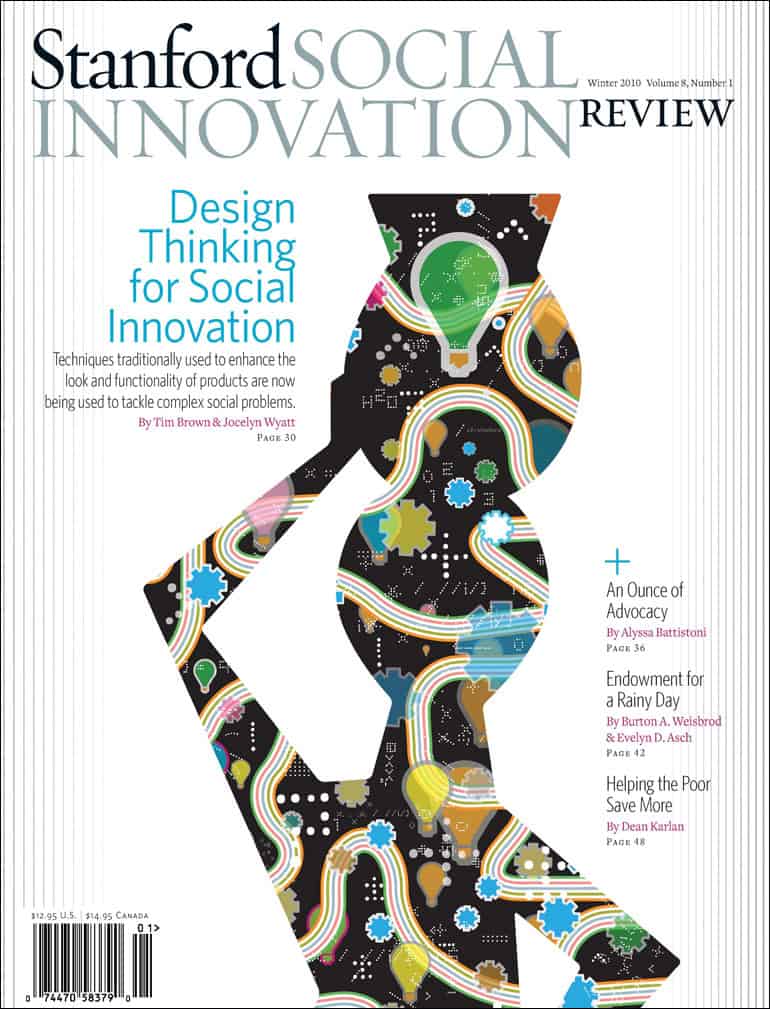

If all you did was read every back issue of the Stanford Social Innovation Review, you would learn more than you would in all the world’s social innovation and entrepreneurship masters and Ph.D. programs combined. (And for a lot less money.) While some articles veer into the arcana of academic discourse, most are written by practical people in the trenches creating real social innovation, full of mistakes, models, and insights. Stop right now and subscribe to their free weekly newsletter here. Many online events are free. Subscribers get access to the entire archive. They have excellent article collections, including the Starter Kit, Design Thinking, Scaling, and Transforming Leadership.

Bill Drayton deserves a Nobel Peace Prize. Since 1980 his organization Ashoka has selected thousands of innovative social changemakers globally who collectively have touched hundreds of millions of lives. The Ashoka model of finding and mentoring high impact entrepreneurs has been copied by others, including Endeavor.org. From their mission statement: “Together, amidst the exponential growth of a new inequality in changemaking at a worldwide scale, we mobilize (and accelerate) a movement to build an “Everyone a Changemaker” world where all people have the right and ability to co-lead solutions that transform their societies for the better.”
Demystifying Silicon Valley is a sister site to Unleashing Impact and teaches venture capital-focused innovative entrepreneurship. This free 24-hour condensation of the over 150 hours of DSV programs was created for the World Economic Forum’s Global Shaper community and was attended by over 350 people in 22 countries. It has also been taught in different formats all over the world. This certificate program focuses on both venture capital and impact oriented innovation. The last few lessons focus on impact solely, but you should watch the entire course.
Lean Methodology

The Lean Startup by Eric Ries
This is the first book any aspiring entrepreneur or innovator must read. You must then reread it periodically throughout your entrepreneurship journey, as the book will have a different resonance at each stage of your company, especially in times of stress. The Lean Startup created a tectonic shift in how Silicon Valley views the science of building startups. Like many transformative books, it has created venomous backlash, mostly from those who have failed to read it and thrash their own caricatures of what they think the Lean Startup methodology means.
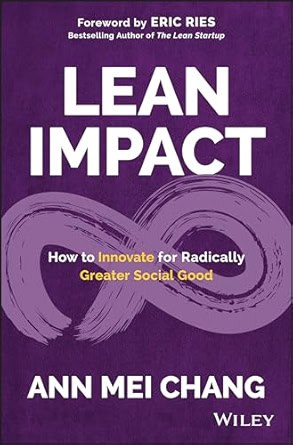
Lean Impact by Anne Mei Chang
Ann Mei Chang was the former Chief Innovation Officer at USAID. Lean Impact applies the lessons of The Lean Startup to problems of social impact, discussing hundreds of examples from real impact-oriented startups globally. Although the book can be read as a standalone book, I find most people extract maximum value by reading Eric Ries’s The Lean Startup first.

The Startup Way by Eric Ries
Yes, Eric Ries appears again. The Startup Way tells of lessons learned applying Lean Startup principles in behemoth, traditional corporate environments, like GE. Can one really apply Lean software-inspired methodology to multi-million dollar turbines? (Yes!) I actually like this book better than The Lean Startup and describe them as The Godfather Part I and Part II, one long movie broken up as sequels. Your Lean education is incomplete without this book. Fun fact: Eric reads the audiobooks so wonderfully, download both for your next long drive.
Design and Growth
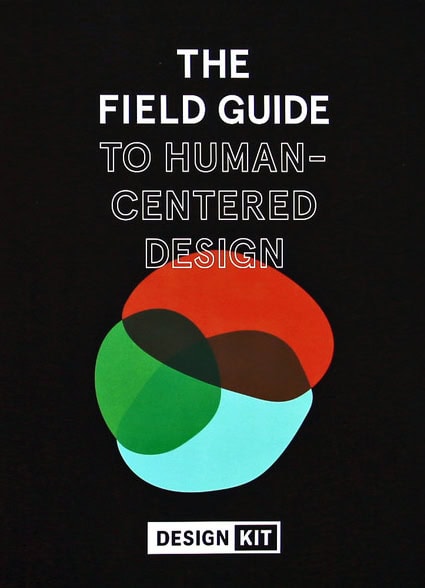
David Kelly pioneered the Design Thinking movement (even if he downplays it) and founded IDEO, which has IDEO.com and IDEO.org, the latter which focuses on projects for justice and inclusion. The Field Guide is IDEO.org’s own work about applying Design Thinking to social innovation. An even better collection of resources from IDEO can be found on its website at https://www.ideo.org/.
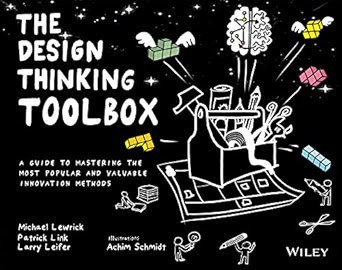
The Design Thinking Toolbox by Michael Lewrick, et al.
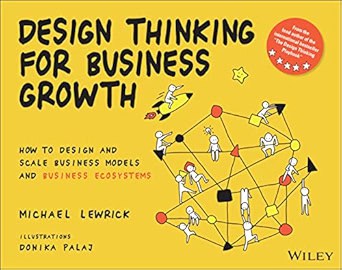
Design Thinking for Business Growth by Michael Lewrick
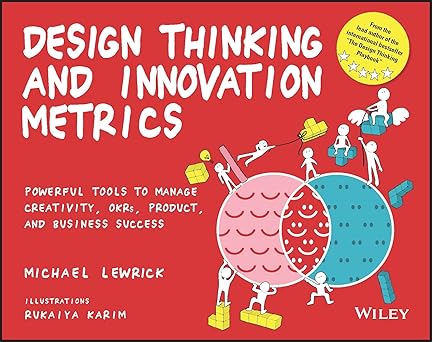
Design Thinking and Innovation Metrics by Michael Lewrick
Michael Lewrick’s books embody their values as much as they teach them. Each page is packed with illustrations to demonstrate the concepts. I find that many people who find reading about innovation and design turgid or unengaging often transform when they experience the ideas visually. So powerful are the graphics, you could study only the diagrams and know more than many people who teach these subjects.
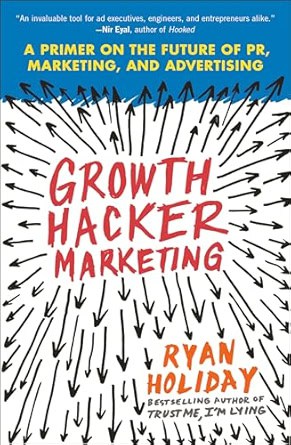
Growth Hacker Marketing by Ryan Holiday
Growth Hacker Marketing is often the first book I recommend to people who do not know what growth hacking is, before I recommend the next book. It is a breezy tour through a marketer’s transformation from traditional marketing to a modern data-driven, gritty, tenacious approach. The business of all businesses is growth, and nowhere is that more crucial than when human suffering is on the line. You should not have a separate product and sales team. The entire team top to bottom must be about growth and data-driven insights and creativity must always lead the way.
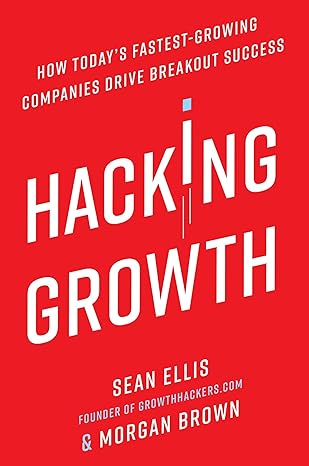
Hacking Growth by Sean Ellis & Morgan Brown
Sean Ellis wrote the book (literally) on growth hacking. This is a must read book, along with The Lean Startup. How can you build billion dollar brands with little budget, using emails, blogs, platforms, and targeted messages? How can you use data analysis, rapid-fire market testing, scrappy viral strategies, and low budget digital hacks to create a self-sustaining nuclear reaction of growth? What measurements matter most to master these tools of “dark magic?” Engineer virality. Leave nothing to chance. All the tools may not apply to every company, but always think tenaciously about growth.
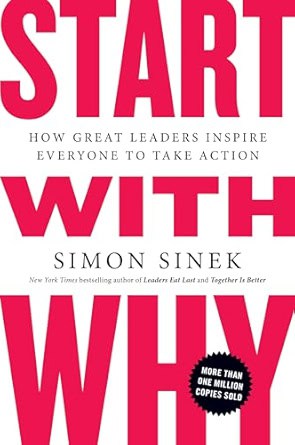
Start with Why by Simon Sinek
I am hesitant to list this book, as it is arguably a self-contained TED Talk (here) stretched into a book. I do include it, though, because the book adds new value and because it drives home a crucial question: why does your organization exist? The best organizations have answers which inspire customers, employees, investors, and others to believe in a vision, thus creating strong brands, cultures, growth, and loyalty. I ask all startup entrepreneurs I meet with why their organizations exist. Almost none get the answer right. Do not make that mistake. Also, lose yourself for a few hours on the Internet watching Simon Sinek’s videos on leadership, communication, and community, as they are the perfect antidote to the hyper toxic masculine models of leadership the culture idolizes. (Also make sure you always have eight minutes for your team and friends.)
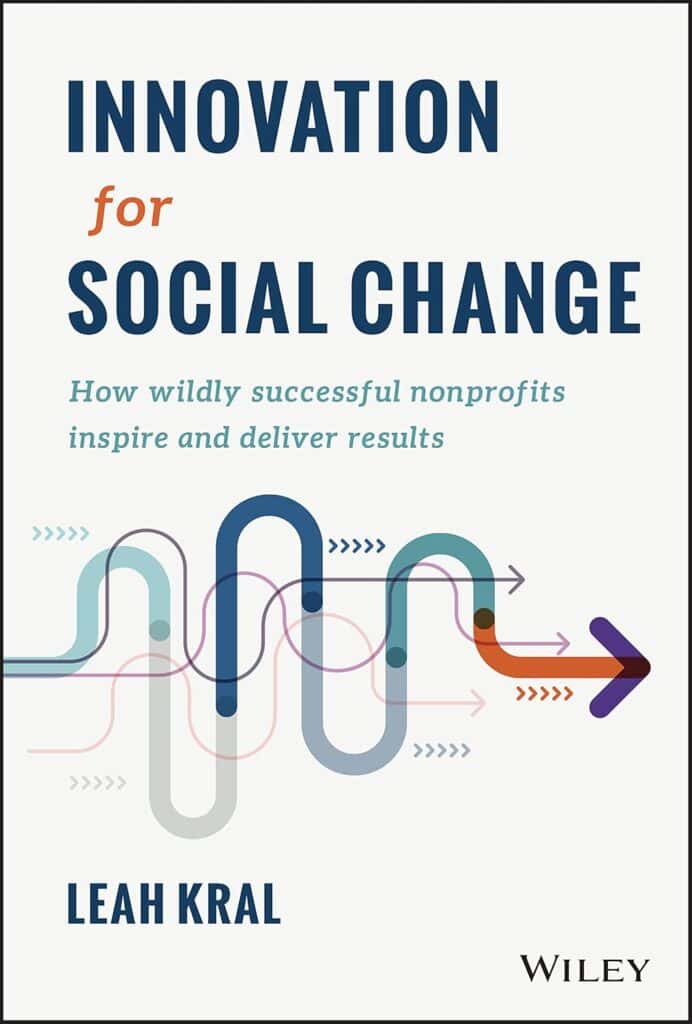
Innovation for Social Change by Leah Kral
Leah Kral applies the fundamental tools of Human Centered Design and Lean to create impact in nonprofit organizations. Instead of teaching you to master the gala banquet, wealthy donor, and grant writing trifecta, she discusses how to be innovative and transformative by focusing on unmet needs, small experiments, learning and adaptation, creative collaboration, organization design, and purpose. “How wildly successful nonprofits inspire and deliver results.” Indeed!
Scarcity, Trauma, Communication
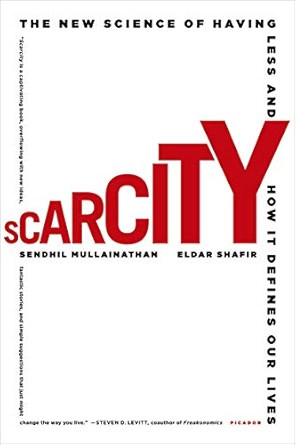
Scarcity by Sendhil Mullainathan & Eldar Shafir
Scarcity should be required reading for any thinking and compassionate adult, along with The Body Keeps the Score. I give copies of both books to friends, high school and college graduates, and sometimes even people I just met. Indeed, you cannot create durable impact without being familiar with the concepts in these books. Deprivation of resources, including financial resources, fundamentally changes people. Scarcity creates cognitive impairment, imposes a “bandwidth tax” on attention, results in decreased executive control, increases impulsive behavior, anxiety, and fear, and degrades health. To survive, people engage in temporal discounting, avoidance, and tunneling. People fall into “scarcity traps,” causing them to relapse even when the immediate conditions have changed, often defeating well-meaning but poorly design impact projects.

The Body Keeps the Score by Bessel van der Kolk
I did work with sexual assault and trauma survivors in college and everything I witnessed is compellingly explained by the decades of subsequent research in this book. Reading it years later was a profound moment, especially the sections on what he calls addiction to trauma. The impact of trauma has a very real physiological basis. Trauma literally rewires the brain and sensory system of survivors. Bessel is a pioneer in the treatment of trauma, the single greatest untreated public health crisis globally. One cannot seriously be a compassionate adult without understanding and being sensitive to the realities of trauma. Many of your friends and coworkers are overwhelmingly likely to be survivors (as might you or your partner be). This is required reading by every adult. You cannot understand or help others if you do not understand the traumas that animate their behaviors.

Never Split the Difference by Chris Voss
Chris Voss spent years negotiating international hostage situations for the FBI. If the terrorists have two hostages, you do not just split the difference, let them kill one, and call it a day. You need to win because lives depend on success. Traditional negotiation books systematically fail to understand how real-life negotiation works, especially when one side games the system (rationally) by being shockingly unreasonable. This is the book I give the CEOs I invest in before they negotiate anything important, especially if the other party is known to be difficult. Bonus: the techniques to tame global terrorists also do a remarkable job negotiating bedtimes with children. Further bonus: many business school professors seem to hate this book because the tools he teaches are notoriously effective in the real world against the traditional “Harvard Negotiation” style that remains in academic vogue.

Why is a book on relationships recommended for aspiring impact entrepreneurs and donors? John Gottman and his wife Julie have rightfully become legends in couples therapy as they systematically studied couples who survived decades together to see what they had in common. It turns out a lot. Their research also can predict which couples will divorce and why. Their methods have the highest clinical efficacy among major couples treatment methods. The communication tools they recommend have applicability far beyond romantic relationships. What makes your relationship last for decades (or implode) will be the same for your business, employment, friendship, and client relationships. The book is really, what makes human relationships last. (Bonus question answered in the trainings: what secret do the world’s leading marriage counselors and a former FBI hostage negotiator know about the most important skill in life you probably do not know?)